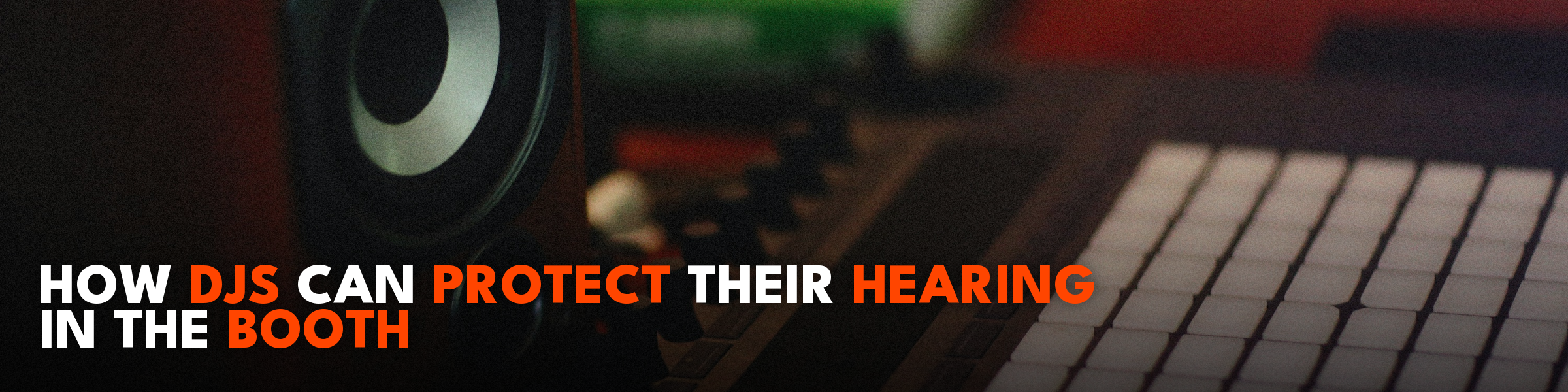
Of the 1,138 music industry workers who went to the charity MusiCares for help with their hearing between 2022 and 2025, 68.5% reported tinnitus. Most of them had worked in music for more than 20 years. Only 13.8% said they wore hearing protection every time they were around loud music, according to a study published in Frontiers in Audiology and Otology in June 2026.
DJs are a particular case. They set the level, they stand closest to the booth monitors, they work late and often several nights a week. Hearing is the one piece of kit in the booth that cannot be replaced. This piece looks at what the latest research says, where the official limits sit, and what working DJs can do about it on the night and between gigs.
What the Numbers Say
The largest recent picture comes from a meta-analysis by McCray and colleagues, published in Otolaryngology - Head and Neck Surgery in February 2026. It pooled 67 studies covering more than 28,000 musicians in 21 countries. According to the American Academy of Otolaryngology - Head and Neck Surgery, 42.6% of musicians reported tinnitus, against 13.2% of control groups. Hearing loss affected 25.7% of musicians against 11.6%, and hyperacusis, a heightened sensitivity to everyday sound, 37.3% against 15.3%.
"Many musicians quietly live with ringing ears, sound sensitivity, or hearing loss." - Shaun A. Nguyen, Medical University of South Carolina
The dancefloor is not much safer. A web-based study run with Resident Advisor, published in February 2025, surveyed 1,020 clubbers. 73.4% reported some degree of permanent ear symptoms. 60.5% thought earplugs were important, but only 32.3% actually wore them in loud venues. The barrier most often ranked first was the impact on music quality, chosen by 45.0%. That is the same fear many DJs have: that plugs will muffle the mix and they will lose the detail they need to blend.
Where the Limits Sit
In 2022 the World Health Organization published a global standard for safe listening venues and events. Its headline recommendation is that average sound levels should not go above 100 dB(A) over any 15-minute period. The standard also asks venues to monitor levels, tune their acoustics and sound systems, make hearing protection available, offer quiet zones and train staff. When the Serendipity Arts Festival in Goa put all six features in place in December 2023, the WHO reported that professionals noticed better sound quality and audiences enjoyed it just as much. The WHO is also clear that the limit does not remove all risk, particularly for people who are regularly exposed.
UK workplace rules, as set out by the Health and Safety Executive, are much stricter because they are built around a working day. Employers must assess the risk at a daily or weekly average of 80 dB(A), must provide hearing protection at 85 dB(A), and nobody may be exposed above 87 dB(A) once protection is taken into account. The gap between those figures and a room averaging close to 100 dB for several hours shows why a long set without protection is a real risk, whatever the paperwork says about who employs the DJ.
Setting Up the Booth
Most of the damage in the booth comes from two things: sustained level from the monitors and sudden peaks. Both can be managed with habits that cost nothing.
Get the monitors right before doors
Use soundcheck to ask the engineer for clean monitors rather than loud ones. Monitors that point at head height and sit close to the decks give a clear picture at lower volume. If the booth sound is muddy, the instinct is to push it up, which makes it louder without making it clearer. Asking for a better position or a tweak to the monitor EQ is usually the better fix.
Watch for volume creep
Ears tire over a night, and tired ears ask for more level. The result is a monitor knob that drifts clockwise hour by hour. A simple check is to pull the booth monitors down slightly at a natural break and see if the mix still reads. It usually does. The same goes for the headphone cue: keep it just loud enough to beat-match, not loud enough to compete with the room.
Avoid the sudden spikes
In the MusiCares survey, 56.4% of respondents said they had experienced acoustic trauma at least once, with very loud feedback given as an example. In a DJ booth that might be a microphone left open near the monitors, a channel opened with the gain too high, or a new track loaded into a cue that is already up. Bring the cue and channel down before loading, set the trim before opening the fader, and mute the mic when it is not in use.
Plugs, Filters and In-Ears
Filtered earplugs are designed to lower the level across the frequency range rather than cutting the highs, which is what makes cheap foam plugs sound dull. Custom-moulded plugs with interchangeable filters are the step up, and many working DJs treat them as standard kit. In a Mixmag feature for Tinnitus Awareness Week, Roger Sanchez said he uses "earplug filters when I DJ which helps protect my ears from the loud volumes of the booth monitors". Laksa told the magazine: "I would 100% recommend getting earplugs...you can get used to them."
Getting used to them is the key point. SHA SHA KIMBO's advice in the same piece was to put ear protection in during the taxi to the club so the ears adjust before the set. Plugs feel strange for the first few gigs, and the temptation is to take them out at the first transition that feels uncertain. Practising at home with plugs in, at moderate level, shortens that learning curve.
In-ear monitors are the other route. A Gearnews guide from August 2025 argues that in-ears give DJs clearer separation and let them work at lower levels than booth monitors, with custom moulds sealing and staying put better than universal tips during an active set. It also suggests feeding a microphone into the booth mix so the DJ still hears the crowd.
There is a catch. The Frontiers paper cites earlier research by Federman and Ricketts, which found that music professionals turned their in-ears up to nearly the same intensity as stage monitors. The authors warn that in-ears are not protective devices in themselves: without proper fitting and advice, the wearer may simply move the loud sound from the room into the ear canal.
Habits Away From the Booth
The MusiCares survey found that 69.2% of respondents had never had their hearing assessed by an audiologist. For a DJ, a baseline hearing test is the most useful thing to do this year. It gives a reference point, it is the route to properly fitted custom plugs, and it turns a vague worry into something that can be tracked.
- Give the ears quiet time after a gig and on the following day, rather than going straight to headphones.
- Mix and prepare in the studio at moderate levels, not club levels.
- Take plugs to every event you attend as a guest, not just the ones you play.
- If ringing lasts after a night out, treat it as a warning and cut back exposure, and see a professional if it persists.
The DJs in the Mixmag feature also pointed to sleep and stress as factors in how tinnitus feels day to day. Telefon Tel Aviv said their tinnitus "improved by about 90% when I quit smoking". That is one person's experience rather than a clinical finding, but it is a reminder that ear health is tied to general health.
What It Means for DJs
The research from 2025 and 2026 points the same way: people who spend their working lives around loud music report hearing problems at far higher rates than everyone else, and most of them are not using protection consistently. For DJs, the fix is less about new gear and more about routine. Clean monitors instead of loud ones, a cue level that stays put, plugs that go in before the first track, and a hearing test that gives a baseline. A DJ who can still hear the detail in a hi-hat at the end of a long career has an advantage no controller update can match.
Cover photo by Alexey Demidov on Unsplash

 Events