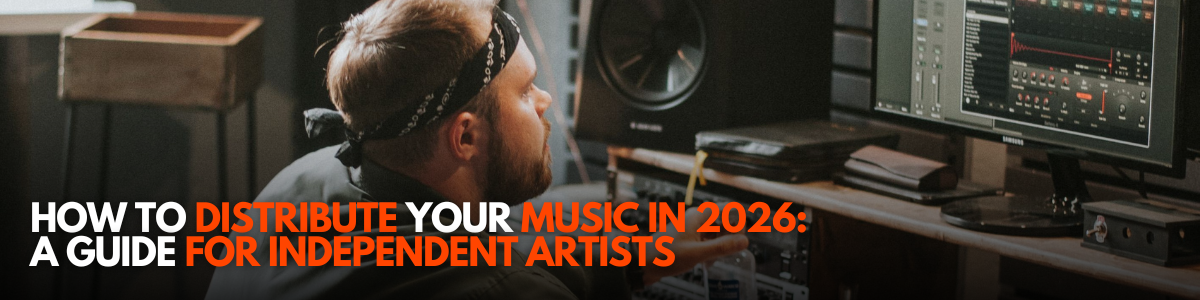
You have finished a track. It sounds right, the master holds up on your car speakers and your headphones, and you want people to hear it on Spotify, Apple Music, and Beatport. There is one step between you and those platforms, and almost no independent artist can skip it: a distributor.
Distribution is the least glamorous part of releasing music and one of the easiest to get wrong. This guide covers what it actually is, how it works, what to look for, and the mistakes that cost artists reach and money every year.
What music distribution actually is
Streaming platforms do not let individual artists upload directly in any serious way. Spotify, Apple Music, Amazon Music, Deezer, Tidal, Beatport, and the rest ingest music through approved distributors. A distributor is the pipe between your finished files and every store, plus the system that collects your streaming money and pays it back to you.
That is the whole job in one sentence: deliver your release to the stores, then collect and pay your royalties. Everything else a distributor offers sits on top of that.
How it works, start to finish
The process is more standardised than most people expect:
- You upload your audio, artwork, and metadata (track titles, artist names, credits, release date, genre).
- The distributor checks the release meets each store's technical and content rules.
- It delivers the release to every platform you selected, with a few days of lead time so the stores can process it.
- On release day, the track appears across those platforms.
- As people stream and buy, the stores report the plays and pay out. The distributor collects that money and passes it to you, usually on a monthly or quarterly cycle.
The lead time matters. Stores need processing time, so a release put together the day before it is meant to go live will miss the date or lose its shot at editorial playlists, which are pitched weeks in advance.
What a distributor does, and what it does not
This is where expectations go wrong. Distribution gets your music onto the shelves. It does not, on its own, get anyone to pick it up.
A distributor handles delivery, store coverage, rights registration, and royalty collection. Some also offer real extras: sync licensing, mastering, press tools, or A&R feedback. What a distributor cannot promise is streams. Anyone guaranteeing playlist placements or a specific number of plays in exchange for a fee is selling you something that does not exist. Treat that as a warning sign.
Promotion is a separate discipline from distribution. The best setup is a distributor that gets the fundamentals right and gives you real tools, then a promotion plan you run on top of it.
The real choice: free or paid, open or curated
Most of the decision comes down to two questions.
Free or paid. Some distributors charge a yearly or per-release fee and let you keep all your royalties. Others take a cut instead of a fee. A growing number are free and keep your royalties yours. Cheaper is not automatically better: read what you get, how fast you are paid, and whether you keep your rights.
Open or curated. Open distributors accept anyone who pays, which means your release sits in a catalogue with millions of others, including a large amount of spam. Curated platforms review who they work with. That gives you a smaller, more credible home and, usually, actual humans who know your genre. The trade is that you have to be accepted rather than just sign up.
Neither model is right for everyone. A hobbyist releasing occasionally is fine on an open platform. An artist treating music as a career tends to do better somewhere selective, where the catalogue means something and someone picks up the phone.
What to look for in a distributor
Before you commit, check these:
- Store coverage. The majors plus the ones that matter for your genre. For electronic artists that means Beatport and Traxsource alongside Spotify and Apple.
- Royalty terms. How much you keep and how often you are paid. Clear beats generous-sounding but vague.
- Rights. You should keep ownership of your masters. Read anything that says otherwise.
- No lock-in. You should be able to leave and take your catalogue with you.
- Real support. A person who answers, not just a help article.
- Extras that are real. Sync licensing, mastering, and honest feedback are worth more than a dashboard full of vanity numbers.
The mistakes that quietly cost artists
The same avoidable errors come up again and again:
- Rushing the release date. Give the stores lead time. A date set too tight kills your editorial and playlist chances before you start.
- Messy metadata. Keyword-stuffed titles, fake features, and near-duplicate uploads now get releases flagged. Streaming platforms spent the last year cleaning up exactly this. Clean, accurate metadata is not optional. We wrote about that crackdown here: The Spotify cleanup and what it means for emerging artists.
- Ignoring rights. Know who owns the master and the publishing before you release. Sorting it out afterwards is far harder.
- Chasing volume. Uploading everything you make, as fast as you can, used to look like hustle. Now it looks like spam to the platforms. A steady run of finished tracks beats a flood of half-ideas.
Where ANGVIS Music Distribution fits
We built ANGVIS Music Distribution because independent electronic artists were being treated as an afterthought by the big aggregators. It is free, it is curated, and it is built by people who actually work in electronic music.
Accepted artists get delivery to stores and streaming platforms worldwide, sync licensing opportunities, mastering, and real feedback from an A&R team that knows the genre. You keep your rights and your royalties. Because it is invite-based, the catalogue stays credible and every artist gets attention that an open platform cannot give.
It is not for everyone, and that is the point. If you are serious about your music and your career, you can apply here: distribution.angvis.com/apply.
The short version
Distribution is the plumbing of a release. Get it right and it disappears into the background, doing its job while you focus on the music. Get it wrong and it costs you dates, reach, and money. Give your releases lead time, keep your metadata clean, hold on to your rights, and choose a distributor whose model actually fits how seriously you take your career.
FAQ
Do I need a distributor to get my music on Spotify?
Yes. Spotify and the other major platforms take music through approved distributors, not directly from most individual artists. A distributor delivers your release to the stores and collects your royalties.
How long does music distribution take?
Plan for at least two to four weeks between submitting a release and your release date. Stores need processing time, and editorial playlists are pitched weeks ahead, so tight timelines cost you opportunities.
Is free music distribution any good?
It can be. Free distributors that let you keep your rights and royalties are a real option. Judge a distributor on store coverage, payment terms, rights, and support rather than price alone.
Do I keep the rights to my music?
With a good distributor, yes. You should keep ownership of your masters and be able to leave with your catalogue. Read the terms carefully if anything suggests otherwise.
What is the difference between an open and a curated distributor?
An open distributor accepts anyone who pays. A curated one reviews who it works with, which keeps the catalogue credible and usually means real humans who know your genre. ANGVIS Music Distribution is curated and invite-based.
How do I apply to ANGVIS Music Distribution?
Apply at distribution.angvis.com/apply. It is free and invite-based, open to independent electronic artists who treat their music as a career.
 Events