Ask most independent electronic artists where their next meaningful cheque might come from and they will say streaming. Streaming pays in fractions of a cent. Sync pays in one placement what a track might take years to earn on Spotify, and it comes with exposure that streaming cannot buy. It is also the opportunity most independent artists never touch, not because their music is not good enough, but because they do not know how it works or how to be ready for it.
Here is the whole thing in plain language: what sync is, how a placement actually happens, and what it takes to be in the running.
What sync licensing actually is
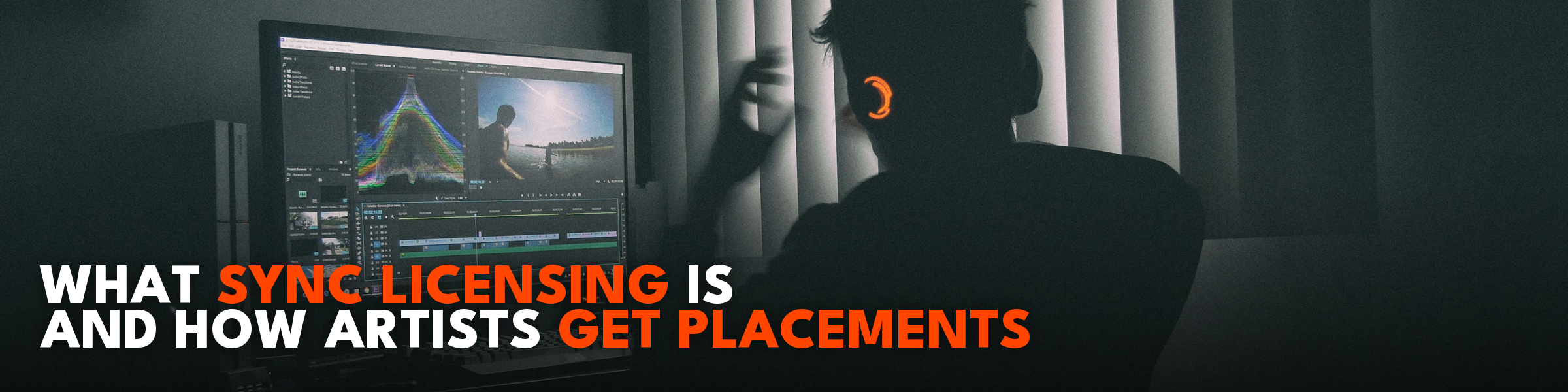
Sync, short for synchronisation, is licensing a piece of music to be used alongside visual media: a film, a TV show, an advert, a trailer, a video game, a social campaign. The name comes from the music being synchronised to picture.
When your track is chosen, you license it for that use and you are paid a sync fee. That fee usually has two parts, because, as with all music rights, there are two sides to license: the recording (your master) and the composition (the song). On top of the up-front fee, a placement often generates performance royalties on the back end when the film or show is broadcast or streamed.
That is the mechanic. A one-off fee to use your music in something visual, plus potential royalties afterwards.
Why sync is one of the best opportunities for electronic artists
Two reasons, and they both favour electronic music specifically.
First, the money and the exposure are disproportionate. A single placement can pay more than a long streaming run, and having your track in a well-placed advert, game or show puts it in front of an audience no playlist would have reached, often with your name attached.
Second, a lot of visual media runs on electronic and instrumental production. Adverts, trailers, games and sports content often need energy and mood without a vocal fighting the dialogue, and they need music that can be cleared quickly, so an independent track that is clean and easy to license is genuinely attractive to the people making those decisions.
How a placement actually happens
The process is more organised than it looks from the outside.
- A brief goes out. A music supervisor, the person responsible for the music in a production, describes what they need: the mood, tempo, genre, reference tracks, and the deadline. This is the brief.
- Tracks are pitched to it. Music that fits the brief is put forward, by libraries, publishers, or the artists themselves through whoever gives them access to the briefs.
- The supervisor selects. They shortlist and choose. This is competitive and fast, and clean, ready-to-license tracks win over ones tangled in unclear rights.
- The licence is cleared. The chosen track is licensed for the specific use, the fee is agreed, and the music is used.
The bottleneck for independent artists is almost always steps one and four: getting sight of real briefs in the first place, and being able to clear the licence quickly when selected.
The one-stop problem, and why it decides placements
Here is the detail that quietly kills independent sync opportunities. A supervisor on a deadline needs to clear both sides of the music, the master and the composition, and they need to do it fast. If your recording rights sit in one place and your publishing sits in another, or worse, are unclear, clearing your track means chasing two parties and reading two contracts. Faced with that and a deadline, the supervisor picks the track they can clear in one conversation.
That is what "one-stop" means: a single party can license the master and the composition together, so a supervisor clears everything in one place. One-stop tracks get chosen. Split or murky rights get passed over, however good the music.
What you need to be sync-ready
Before you chase placements, get the basics right:
- Clean, clear ownership. Know exactly who owns the master and the composition, and make sure every collaborator is documented. Unclear rights are the single most common reason a track loses a placement.
- One-stop licensing. Be able to license the master and the composition together. This matters more than most artists realise.
- Access to real briefs. You cannot pitch to opportunities you never see. This is where most independent artists are simply shut out.
- Deliverables ready. Supervisors often want an instrumental, sometimes stems, and accurate metadata. Having them ready means you can say yes immediately instead of scrambling.
How independent artists actually get placements
There is no magic list. Realistically, you either build relationships with supervisors and libraries yourself over years, or you work with someone who brings briefs to you and can clear your tracks one-stop when you land one. For most independent artists, the second route is the only practical one, because the first is a full-time job in itself.
The honest version is that you still have to do the pitching. Nobody lands sync for you by magic. What changes the odds is having the briefs put in front of you and the clearance handled, so that when your track fits, you are actually in the running instead of watching from outside.
Where ANGVIS Music Distribution fits
Sync is built into ANGVIS Music Distribution for exactly this reason. We bring in sync briefs, and you pitch your own tracks to the ones that fit. If a supervisor chooses your track, ANGVIS Music Distribution handles the one-stop licence, master and composition together, so it can be cleared in one place. When a placement lands, the fee is split 50/50, and our half is the full commission on that placement with no further deduction.
The choice of what to pitch stays with you on purpose, because you know your music better than anyone. What we remove are the two blockers that shut independent artists out: sight of real briefs, and the clearance that makes your track easy to say yes to. And to be clear about what a pitch is: putting a track forward for a brief is not a placement. The music supervisor still makes the call, and most pitches, on any platform, are not picked.
If you want your tracks in front of sync briefs with the clearing handled, you can apply here: distribution.angvis.com/apply.
The short version
Sync is licensing your music to visual media for a fee, and for electronic artists it is one of the best-paid and most overlooked opportunities there is. Placements come through briefs, they are competitive, and they are won by tracks with clean ownership that can be cleared one-stop, master and composition together, fast. Get your rights clean, be ready with instrumentals and metadata, and get access to real briefs. You still do the pitching. The difference is whether you are ever in the room.
For how the underlying royalties work, see How Music Royalties Work.
FAQ
What is sync licensing in music?
Sync licensing is licensing a piece of music to be used alongside visual media, such as a film, TV show, advert, trailer or video game. You are paid a sync fee to use the recording and the composition, and a placement often generates performance royalties on the back end when the production is broadcast or streamed.
How much does a sync placement pay?
It varies enormously with the use, the budget and the profile of the placement, from modest fees for small productions to significant sums for national adverts or major shows. A single placement can pay more than a long streaming run, which is why sync is so valuable for independent artists.
How do independent artists get sync placements?
By pitching tracks that fit a music supervisor's brief, and being able to clear the licence quickly when selected. The two things independent artists usually lack are sight of real briefs and one-stop clearance. Working with a service that brings briefs and handles clearing solves both, though you still pitch your own tracks.
What does one-stop sync mean?
One-stop means a single party can license both the master and the composition together, so a music supervisor clears everything in one place. Supervisors on deadlines strongly prefer one-stop tracks, because split or unclear rights are slow to clear and get passed over.
Does ANGVIS Music Distribution pitch my music for sync?
No. ANGVIS Music Distribution brings in sync briefs and you pitch your own tracks to the ones that fit. If a supervisor picks your track, we handle the one-stop licence, master and composition together, and when a placement lands the fee is split 50/50. You keep ownership of your masters and compositions.
Cover photo by Mark Cruz on Unsplash
 Events